
The Nova Scotia Trip
and yes I miss the pets so much!

For the first time since Bunsen joined our family, Kris and I have gone on a vacation away from home for longer than a week.
As I write this, Kris, Adam, and Annalise are sleeping, but my mind is still on Mountain Time. I never fully adjusted to the three-hour time change, which I suppose means my circadian rhythm has stubbornly remained Albertan.
I only have one pet story this week, so I thought I would run down what we did and sing the praises of Nova Scotia, one of the Maritime provinces of Canada.
Why Nova Scotia?
There are a TON of places to travel in the world, and it may seem odd to some that we chose Nova Scotia.
For Kris and Adam, they had been here very briefly and LOVED it when the Royals Marching Band came out four years ago. There were tons of things they wished they could have spent more time doing, or things they wished they could have seen, and Kris always wanted to go back.
I had never been farther east in Canada than Manitoba, which seems like an odd thing for a Canadian to say, but our country is ENORMOUS. For Albertans, it’s so much easier to just head west to the ocean instead of east. Halifax is actually thousands of kilometres from home, and you can cross multiple European countries in the distance it takes to get from Alberta to Nova Scotia.
So east we went!
I was SUPER emotional dropping all the dogs off and leaving Brix. It hurt my heart way more than I thought it would.
So much so that part of my brain was shouting at me, “Just let Kris take the kids on the trip and YOU STAY HOME.”
I knew the animals would be fine. Of course they would miss us, but emotionally and physically, they were going to be okay. They were staying with people we trusted, and they would be safe and cared for.
But knowing something logically and feeling it emotionally are two VERY different things.
Our animals have become such a huge part of my life and my daily routine that suddenly being away from them felt almost impossible.
And there is actually some science behind that.
Our brains LOVE routines. The little things we do with our pets every day like feeding them, walking them, talking to them, having them follow us around, finding them sleeping in their usual spots, all of this become predictable parts of our lives. Our brains build those interactions into our daily patterns, and the animals themselves become part of the cues that tell our brains, “Everything is normal.”
But life is short, and memories are made by experiencing things. Travel is one of the best things you can do to make those memories. You see new places, meet new people, experience different cultures and environments, and hopefully come home with stories you’ll tell for the rest of your life.
I know all of that.
I know the science.
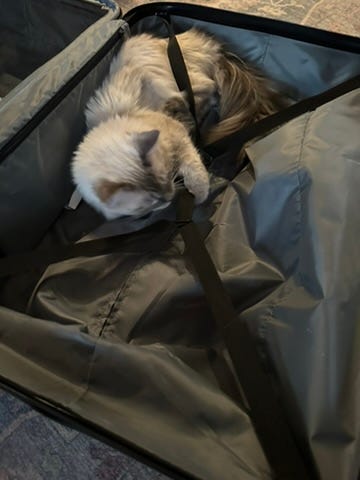
But as I hugged my little cat before we left, I still had misty eyes.
Unfortunately, the airport wasn’t going to wait for one sentimental man having an emotional crisis about leaving his little cat.
So we had to go.
Days 1–3
The travel wasn’t too bad. We flew on Porter Airlines and thought it went great. It did take us basically all day to fly from Edmonton to Halifax because non-stop tickets were literally twice the money, so we had a two-hour layover in Montreal.
We got in at midnight thanks to the three-hour time change, with all of us wide awake because our bodies thought it was only 9 PM. As I mentioned, I still haven’t adjusted. I’m up until midnight or later each day and then I’m awake a 6AM. Everyone else thinks I’m crazy.
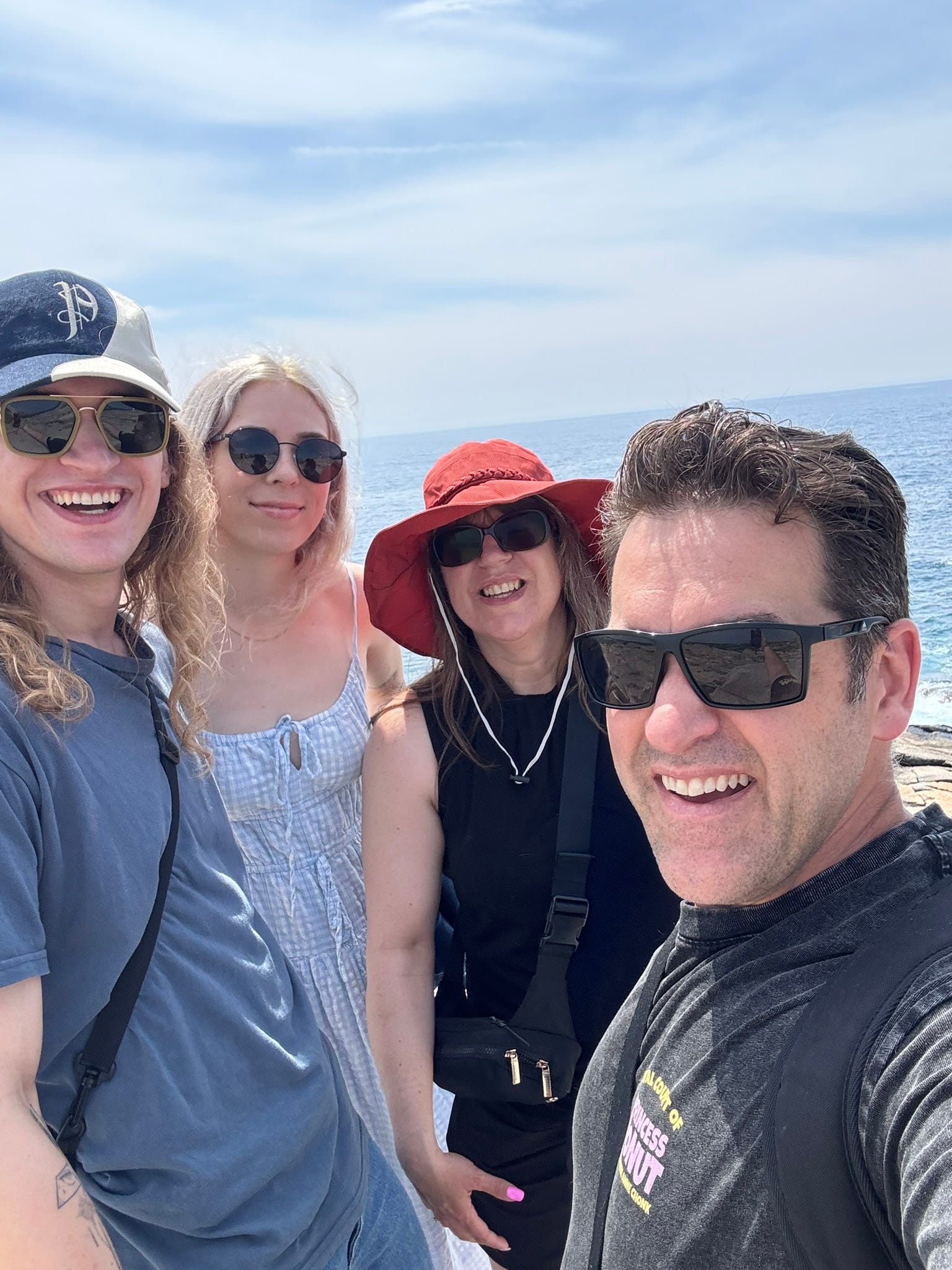
The next two and a half days we explored Halifax and some of the areas around the capital. We went to Peggy’s Cove and Lunenburg, and did a ghost tour late at night.
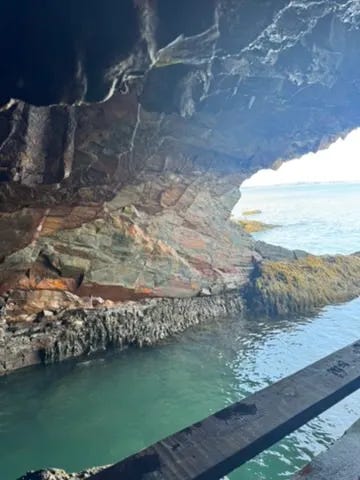
The coastline around Peggy’s Cove is gorgeous, but the science teacher in me also loved the geology. Much of the area sits on ancient granite that formed hundreds of millions of years ago, and then glaciers came through during the last Ice Age and basically went to town on the landscape. They scraped, polished, and moved huge chunks of rock, helping create the rounded, exposed landscape you see today.
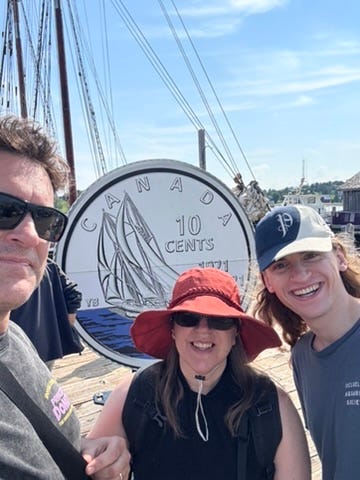
I also got to see the Bluenose II (Bluenose I sank) and the Bluenose is on our dime - our 10 cent coin. Our family, like most Canadians, are quietly extremely patriotic and fiercely proud of our country. It was super cool to this this epic ship, something that for my entire life was on the dimes rolling around in my pocket.
The next day we hiked an epic trail called Cape Split for an amazing view.
Cape Split overlooks the Bay of Fundy, which has the highest tides in the world. The shape of the bay helps amplify the tides as Atlantic water is pushed farther and farther into an increasingly narrow space. An absolutely ridiculous amount of water moves in and out of the Bay of Fundy every day.
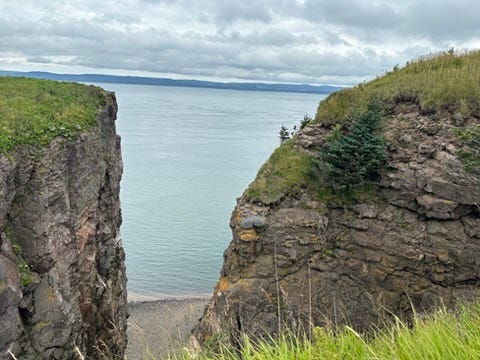
After the hike, we spent some time listening to live music on the Halifax waterfront.
We also met a community member, Rich, at a Tim Hortons for breakfast, and it was a great conversation! We explored the huge Halifax Citadel, and then it was off to the central-north part of Nova Scotia and a little town called Tatamagouche.
Days 4–7
The drive was scenic the entire way, and eventually we found our cabin, which looked out onto the ocean.
I had thought we would spend a bunch of time outside enjoying the views.
We were NOT prepared for the mosquitoes.
I thought we had bad mosquitoes in Alberta, but the CLOUDS that descended on us were outrageous. Only 30% DEET seemed to do anything, and they somehow managed to bite through clothing, so we basically hid inside unless it was time to travel somewhere.
Thank goodness my phone was spying on me, because a video popped up about a local waterfall and swimming hole nearby. We headed out in the morning to check it out.
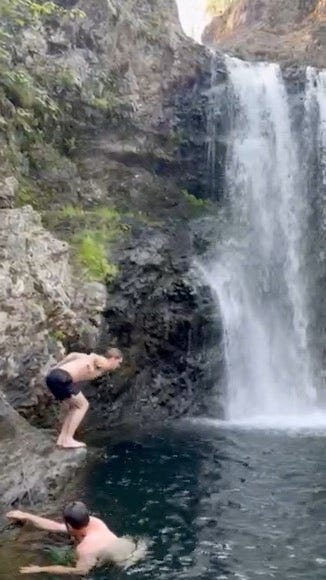
It was AMAZING.
It was a short hike in, and the swimming hole was absolutely beautiful. I honestly could have stayed there for the entire trip. Adam and I jumped off the side—not too high—over and over again. We got swim masks and explored the pools, watching little river fish dart around beneath us.
Also, THERE WERE NO BUGS.
HA!
We eventually had to leave because Kris had booked us a Tidal Bore Adventure about 40 minutes away.
I knew what we were getting into.
The rest of the family did not.
The Bay of Fundy tides push an enormous amount of seawater back into rivers flowing toward the ocean. When that incoming tide meets the outgoing river current, it can create a tidal bore—a wave of water travelling UP the river. Throw in sandbars and the shape of the river bottom, and you get some pretty wild rapids.
And we were going to drive boats through them.
We got tossed around like rag dolls, and both Adam and I got kicked right out of the boat.
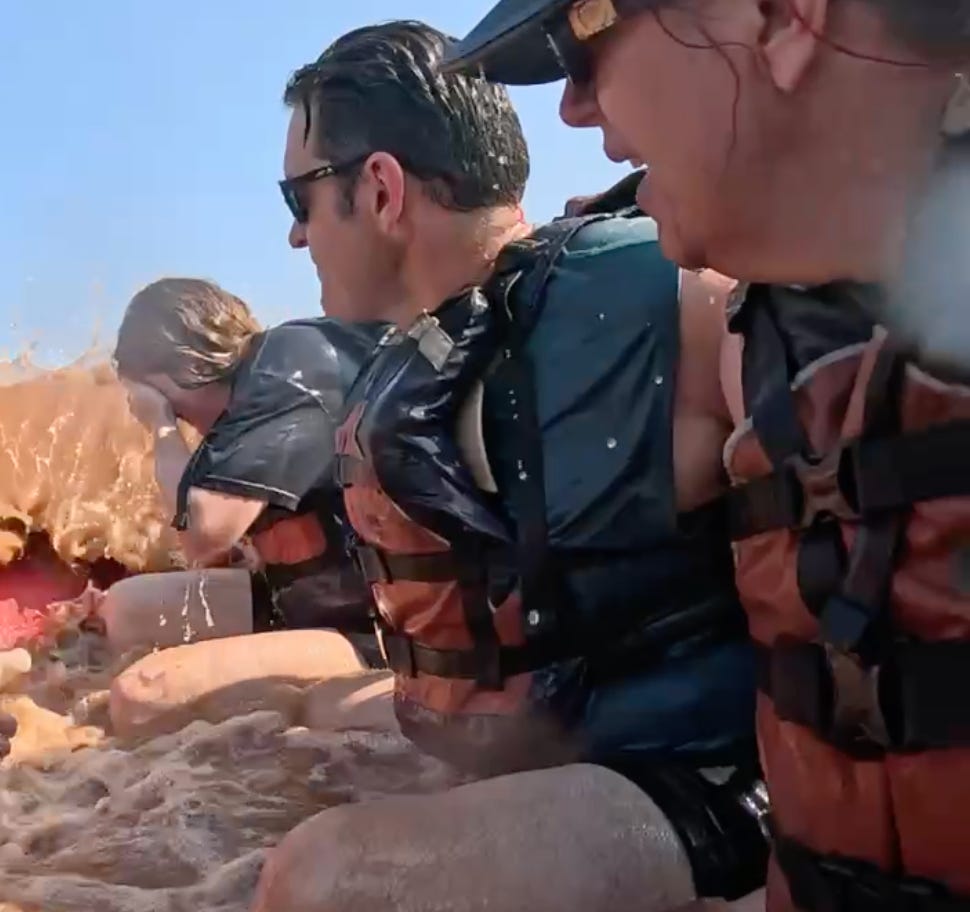
This might sound terrifying.
It was honestly SO MUCH FUN.
The next day we went back to the waterfall because we all agreed it was amazing, and we stayed for another couple of hours.
We also checked out a couple of local farms. One was a lavender farm, where Kris spent WAY too much money on lavender treats, which Adam promptly gobbled up.
Then we spent the rest of the day at the beach.
Now, we had been warned that the Atlantic Ocean was going to be FREEZING to swim in.
That is probably true in many places, but the Northumberland Strait along this part of Nova Scotia has some of the warmest ocean water in Canada. The water is relatively shallow, which means the summer sun can warm it much more effectively than the deeper waters of the open Atlantic.
And it was GLORIOUS.
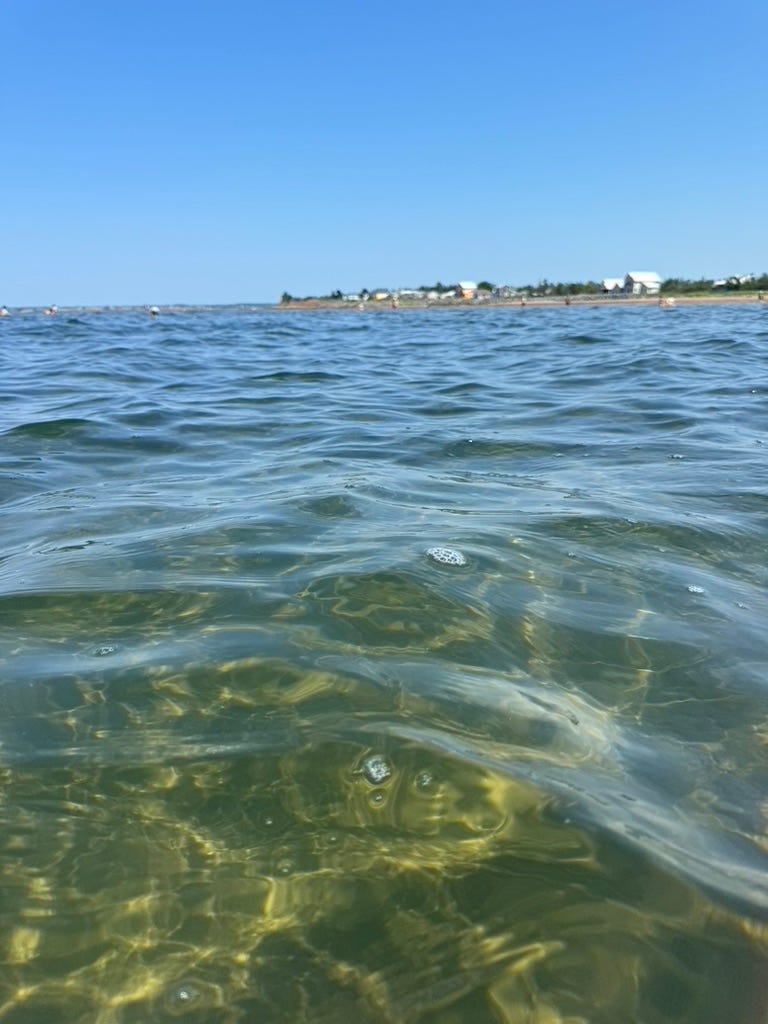
After spending my life swimming in alpine lakes and the ocean off Vancouver Island, the water near Tatamagouche felt bathtub-warm in places. The coldest it got felt like an outdoor swimming pool.
I still can’t believe how warm the ocean was.
I swam all day, collecting crabs for the kids to look at and generally annoying the local crab population.
We all got sunburned.
Science teacher note: water reflects UV radiation, so you can get absolutely cooked at the beach even when you’re spending a bunch of time IN the water.
Lesson learned.
Sort of.
It was then time to say goodbye and head to Cape Breton.
The Last 3 Days
Cape Breton is the northeastern part of Nova Scotia, and it is SUPER rugged and rocky.
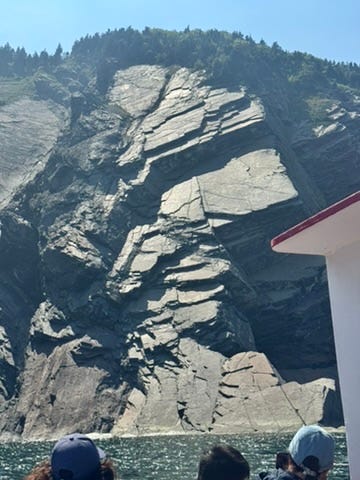
Geologically, Cape Breton is fascinating because the island is basically a collage of ancient pieces of Earth’s crust that were smashed together over hundreds of millions of years as continents collided and mountains formed. Later, glaciers carved through the landscape, helping create the steep valleys, cliffs, lakes, and rugged coastline you see today.
We stayed in a fairly large town, but took a trip WAY up north to go whale watching and drive part of something called the Cabot Trail.
It was a good two and a half hours to get to the whale-watching outfit, but the drive was beautiful, winding along the coast.
Whale watching was also INCREDIBLE.
After following the wild and rocky coastline for about an hour, we were treated to a group of pilot whales swimming extremely close to the boat.
It was the closest I have ever been to whales in my life.
I’ve been whale watching before, and the three times I went with the Bamfield Marine Trip I planned for the school, it was super underwhelming.
Not this time.
The pilot whales were everywhere.
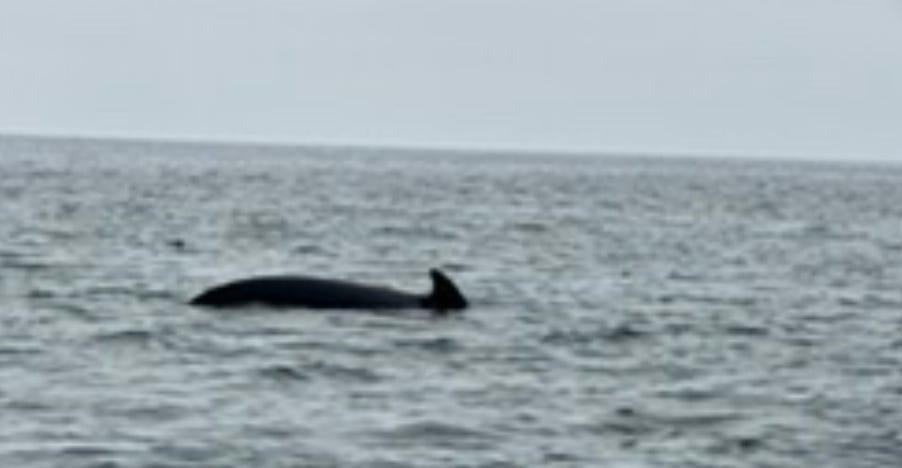
Pilot whales are actually members of the dolphin family, despite having “whale” in their name. They’re incredibly social animals and often travel in tight family groups called pods. They use echolocation to hunt and navigate, sending out clicks and listening for the echoes that bounce back from objects and prey around them.
These whales were so close that you could actually SMELL them when they surfaced and exhaled.
A whale’s “blow” isn’t a fountain of seawater from its lungs. It’s mostly warm, moist air expelled at high speed through the blowhole. When that warm air hits the cooler outside air, the water vapour condenses into the visible mist you see above the whale.
And apparently it has a smell.
A very unique smell.
We have one more adventure today: heading out to see the adorable puffins.
Atlantic puffins spend most of their lives at sea and only come onto land to breed, so getting to see them along the Nova Scotia coast is going to be an amazing way to finish the trip.
Then it’s a LONG trip home.
Nova Scotia has been incredible. The geology, wildlife, tides, ocean, history, food, tiny towns, rugged coastline, and ridiculously friendly people have made this one of those trips I’m going to remember for a very long time.
Mosquitoes aside.
Thanks for reporting, Jason. Always the teacher and scientist and great communicator (and writer), you educate us while you paint an amazing word picture for us. Enjoy the remaining days in eastern Canada and best wishes for the flight home. Your pets are waiting to greet you with love and kisses and purrs.
Wow, what a great update!! Fascinating information. Although, being in the older person category, I will live vicariously through the pack family! Whoever planned your trip (Kris?) did an amazing job. Thanks so much, and can't wait for the reunion update!
Susie from KC